
The Sanitary Extruder Valve (SEV)
Overview
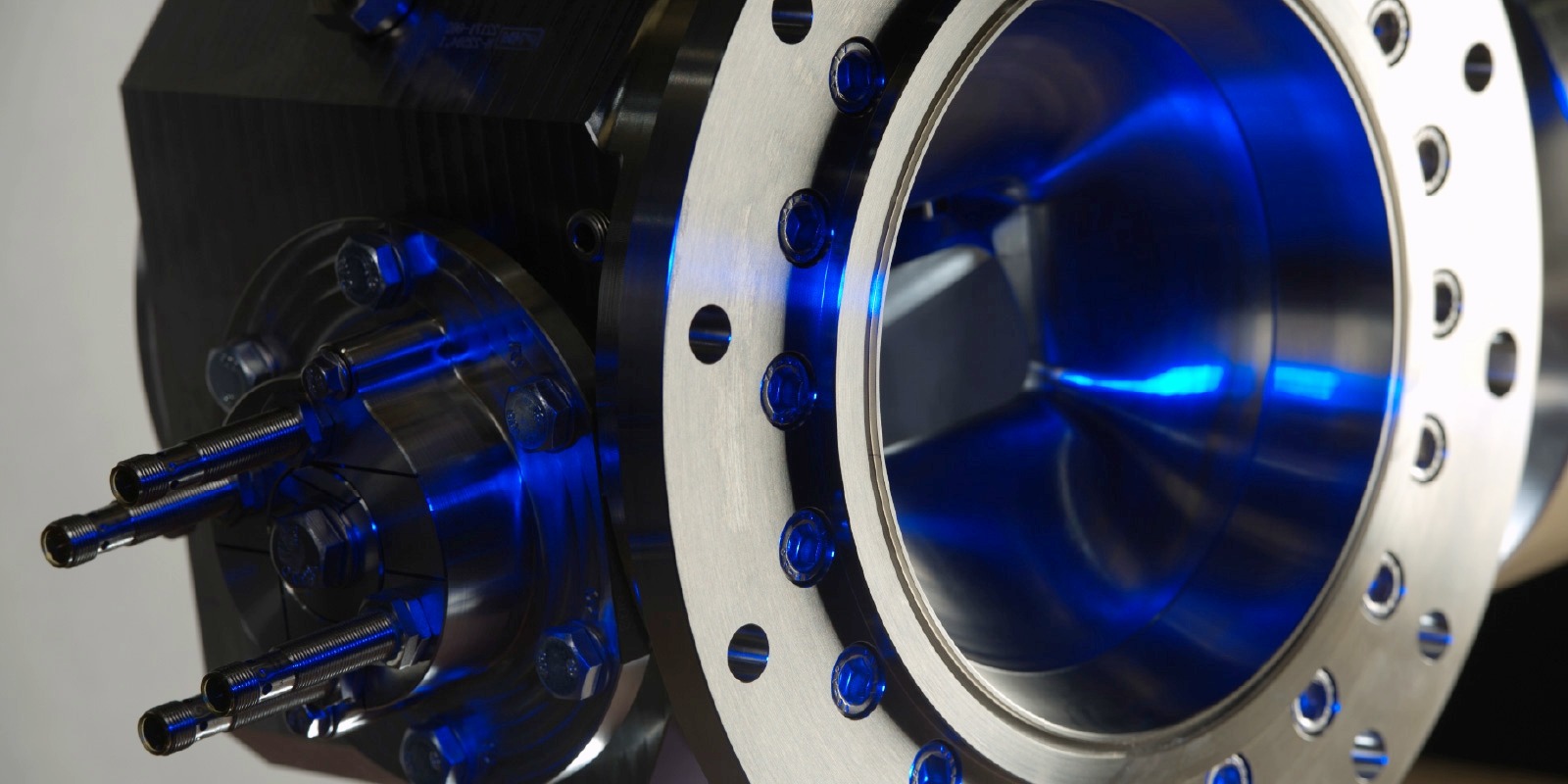
The Sanitary Extruder Valve is an energy-management valve installed at the end of the extruder. It supports a hygienic, accelerated start-up by diverting potentially raw product to waste and applying a controlled restriction until the product reaches the critical temperature required for safe downstream processing.
Once the product is ready for processing, the valve adjusts the restriction in line to control the density of the finished product accurately and repeatedly. It also provides rapid, controlled dumping to waste during shutdown.
Key Benefits
Hygienic Start-Up
Key figure: Zero raw product downstream
Potentially raw product is diverted to waste until it reaches the critical temperature required for safety, preventing it from entering the pneumatic convey hood or Frazer-Nash hood.
Accelerated Start-Up
Key figure: Restricted dump orifice
A restricted orifice in the dump position increases start-up restriction, helping the extruder reach stable, process-ready conditions more quickly.
Repeatable Density Control
Key figure: Repeatable valve adjustment
Accurate, repeatable valve positioning controls the in-line restriction and maintains consistent finished-product density from run to run.
Rapid, Safe Shutdown
Key figure: Immediate dump to waste
The valve provides rapid, controlled isolation and redirects product safely to waste during shutdown or an out-of-specification condition.
Fits standard 8-inch-long, 20-hole-pattern end-of-extruder energy valve fittings.
Can be adapted with Frazer-Nash Bayonets on the infeed and discharge sides of the valve.
Compact, packaged design supports quick maintenance and product changeovers.
Maintenance parts can be changed easily without extended downtime.
Repeatable valve restriction and control support consistent operating accuracy from run to run.
Hygienic Process Safety
Repeatable Servo Control
Maintenance and Changeover
Adaptable Restriction Profiles
The product is completely isolated from the pneumatic convey line during start-up.
Potentially raw product is diverted to waste until it reaches its critical safe temperature.
Only then is product directed into the convey line or treat head, supporting a controlled and hygienic production start.
Servo-driven actuation enables tight integration with the line controls and accurate positioning of the rotating valve element.
Dump, process and restriction positions can be recalled consistently for repeatable start-up and production conditions.
Standardised positions and assemblies support consistent operation across multiple lines producing the same product.
The valve has been designed from the ground up for straightforward inspection, servicing and component replacement.
Most routine maintenance tasks can be completed while the equipment remains installed on the production line.
When removal is necessary, the compact package and reduced weight make complete equipment changeover easier than with conventional alternatives.
The restriction profile can be configured independently for both the dump and process positions.
Dump-position restriction can be selected to accelerate extruder warm-up while safely directing product to waste.
Process-position restriction can then be adjusted to suit the specific extrusion process and recipe, providing accurate density control.
How it Works
The Sanitary Extruder Valve is a three-port valve with an internal rotating element. During start-up, the element is positioned to direct product into a waste container or waste conveyor. The waste path can be additionally restricted so the extruder builds temperature more quickly, providing an accelerated start-up while preventing potentially raw product from entering the downstream process.
Once the product has reached the required safe temperature, the rotating element moves to the process position and directs product through to the die, ready for production. During operation, the valve restriction can be adjusted in response to measured product density, allowing accurate and repeatable density control across production runs and multiple lines.
Technical Specifications
| Maximum Working Pressure | 100 Bar |
| Maximum Temperature | 125C / 257F (extrudate temp) |
| Aperture Area | 0.3 to 7.6 square inches | 1.8 to 45.6 square cm |
| Circle Area (equivalent) | 0.6 to 3 inch diameter | 1.5 to 7.6 cm diameter |
| Weight | 98Kg |
| Length | 8” | 203mm |
Applications
- In-line installation between the extruder and a Phase I Sanitary Extruder Hood for hygienic kibble production.
- In-line installation with treat heads to provide the same controlled start-up, dumping and density adjustment for treat processing.
- Extrusion applications requiring a three-port product valve with independently adjustable dump- and process-position restrictions.
Related Products
SEH
The Sanitary Extruder Hood (SEH) is used in the manufacture of dry, cereal based foods produced continuously on a cooker extruder, commonly known as kibble.
BCB
The Bi-Colour Barrel (BCB) is an upgrade for an existing twin-screw extruder that allows two distinct products to be produced continuously and simultaneously from the same machine.
Co-Extrusion Head
The Co-Ex is designed to produce filled treats directly from the end of an extruder. It takes the main extruder flow and divides it evenly across a number of treat nozzles, allowing multiple product strands to be formed at the same time.
Built for Precision. Trusted for Performance.
Behind every breakthrough is engineering that performs exactly as intended.
At Frazer-Nash Manufacturing, we help organisations working at the forefront of science, space and advanced technology
bring complex ideas to life through precision manufacturing, expert engineering support and uncompromising quality.
Whether you are developing a prototype, solving a manufacturing challenge or scaling a specialist production programme,
we are ready to help you move forward with confidence.
